
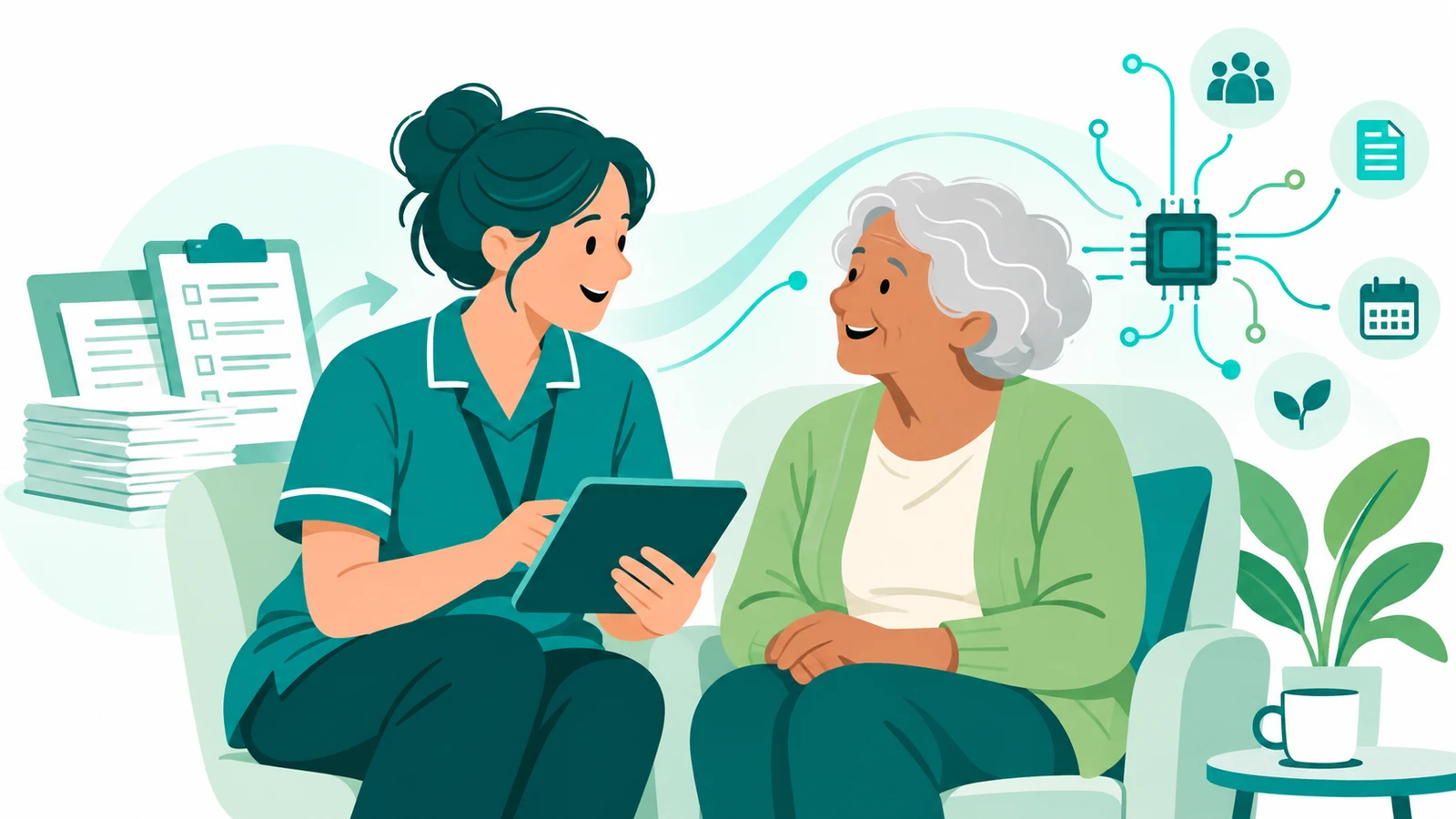
AI has arrived in social care. Let’s make sure it arrives well.
Some research landed in my inbox this week that I feel every care provider should read. Care England, the Institute for Ethics in AI at Oxford, Serene Care and Digital Care Hub asked care leaders how they are using artificial intelligence, and they found most already are. Of the 26 surveyed, 14 said their service uses AI daily, for care planning, analysing care notes, medication management, recruitment and AI-enabled fall sensors. Only seven were not using it at all.
Before I go on, I should declare an interest. Insequa builds AI tools for care providers, and this week we introduced Tilly, our AI PIR Manager, so you would expect me to be in favour. I am. But I’ve spent 40 years working in health and social care and I’ve watched plenty of technology arrive with big promises and quietly slip away. AI does not have to go the same way, provided the sector goes in with its eyes open.
I’ll start with the benefits. The obvious one is time. Many of the Registered Managers I talk to spend their evenings and weekends doing admin. If AI can draft a care plan review, summarise a month of daily notes or gather the evidence for a Provider Information Return, that time goes back to the people the service is there for. Most of the providers already using AI said they felt confident it would bring time savings.
Safety is another. Medication systems and fall sensors pick up what a tired pair of eyes on a night shift can miss. We’ve all been there at 4am on a busy nightshift with grit in your eyes and cottonwool in your head. Any help that technology can offer at those times will make care safer.
Consistency matters too. Anyone who has read a stack of care records knows how much depends on who was on shift and how comfortable they are with writing. The quality of care records can vary considerably so AI tools that help staff get their actions and observations down clearly will lift the standard of record keeping and governance for everyone.
Then there’s capacity. The population is ageing, the workforce already has 111,000 vacancies, and nobody will close that gap by working harder. We need help from somewhere.
The research is just as frank about the risks, and rightly so. The first is accuracy. AI output has to be checked for accuracy, bias and completeness, and respondents described the double-checking as a new administrative burden. I would be wary of any supplier who says their tool needs no checking. The only approach I would promote is using AI as the drafting function with a human verifying accuracy, every time. CQC put it well: AI can enhance, but not replace, human decision making.
The second risk is confidentiality. Care services hold some of the most sensitive personal information there is, and some leaders said privacy was the main reason they had held back. Quite right too. Where is the data held, who can see it, and what happens when the contract ends? If a supplier cannot answer in plain English, I would not give them my information.
The human side worries me most. The report raises a concern about staff, particularly younger workers who use generative AI widely, leaning on drop-down options and AI-written text rather than writing about the person in front of them. I would take a scrappy note that tells me Mary had a bad Tuesday over a polished one that says nothing authentic or person-centred.
There are familiar worries too: long contracts, products that don’t suit the service, unreliable tools marketed hard at people with no time to test them. Ask for a trial and ask how you get out.
Some leaders feared commissioners would use AI as a reason to cut funding and replace human care. I hope not, because it would miss the point. The whole point about this technology is that it has the potential to give care workers more time with people, not mean we have fewer of them.
What stayed with me, though, was that the biggest barrier to adoption was not the technology. It was the lack of clarity about what regulators and commissioners expect. CQC published its first statement on AI in May, yet providers still don’t know how inspectors will assess it, and most of those surveyed had received no formal training. They have written their own governance because nobody else has.
I would say two things. To regulators and commissioners: be transparent, be consistent, and fund the training you expect providers to have. To providers: don’t wait. Use AI for the work that eats your time, keep a person in charge of every decision, insist on straight answers about data, and write your governance down.
The technology is here and it’s not going away. Whether it does any good for the people we support is largely down to us.
Bill Watson, Director, Insequa