
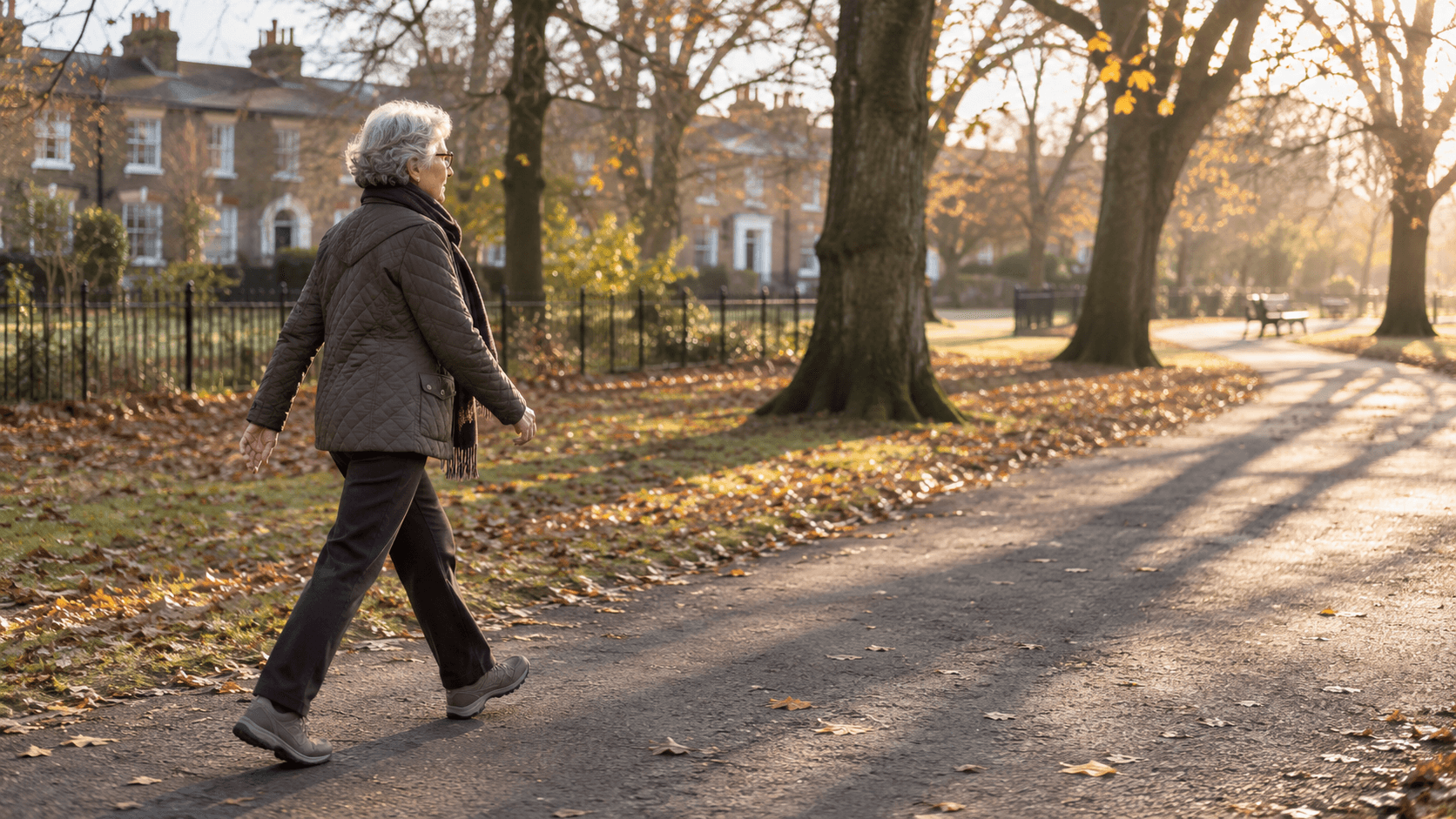
I was at a climbing wall last week. After more than twenty years away from a sport I love I’m getting back into it in an effort to get some strength and fitness back. Returning to sport and exercise got me thinking about my own ageing process and, more broadly, about ageing in society and whether we have a personal responsibility to age well.
There’s really strong evidence that exercise helps us to age well. A Cochrane review of 108 randomised trials, involving more than 23,000 older people living in the community, found that exercise cut the rate of falls by 23%, and by 34% in programmes that combined several types of exercise (typically balance, functional and resistance training). Strength in midlife matters too, because a study that measured grip strength in more than 6,000 men found that, 25 years later, the weakest third had more than twice the risk of struggling to look after themselves compared with the strongest third. It’s never too late to start either, because in the English Longitudinal Study of Ageing, people who took up exercise later in life had more than three times the odds of ageing healthily compared with those who stayed inactive. Those last two studies show a link rather than proof of cause, of course, but the trials point the same way.
We are all highly aware of how much strain the health and social care sector is under, and the increase in need for care shows no sign of letting up. The Office for Budget Responsibility’s latest long-term projections show health spending rising from 8% of national income at the start of the next decade to 13% by the mid-2070s, and adult social care from 1.2% to 1.8%. Meanwhile, the CQC’s latest State of Care report says there were just over two million new requests for council-funded care in a single year, around two thirds of them from people aged 65 and over, and seven in ten ended with nothing more than information. That’s a lot of people already knocking on the front door.
The question I’m asking in this article is, given the level of demand I’ve just outlined, do we as individuals bear a responsibility to do whatever we can to maximise our number of healthy years lived and our independence and reduce our need for care? The OBR makes the point that demand for health services “is not directly linked to an individual’s age but to how healthy people are at different ages”. In other words, how big the bill gets depends partly on how well we age, and that’s the part we have some say over.
Of course, I understand this is a complex debate and I am in no way suggesting a requirement for care and support is any indication of personal decision making. We experience numerous sociogenic impacts on our health that are totally outside our personal control, such as poor housing, fuel prices, the price of healthy food and planning decisions that increase our reliance on our cars and many situations or conditions arise, seemingly, from a cruel throw of the dice. However, with an outlook of ever-increasing demand for a strained resource, should we not take whatever steps that we have under our control, to delay or minimise our need for support from others?
I can hear the objections. I have lived most of my life during a time when the Overton Window has moved inexorably to the right, during a time when we have celebrated our individual freedoms and rights. But don’t those freedoms bring associated responsibilities?
I do believe the state has its part to play here too. Unfortunately, since the austerity measures brought in by the Cameron/Osbourne government, the state’s ability to deliver preventative measures, to provide education to new parents on healthy life choices or fund strength classes that help avoid a person needing a care package, rather than only paying once they do, has been significantly undermined.
The statistics I quoted above indicate we are heading towards a health and care system that can’t keep pace with demand. Perhaps we’re already there. We know we can’t just rely on funding increasing and supply expanding, so we must ask ourselves searching questions about how we manage the situation facing us.
I’d genuinely like to hear what you think. What do we owe our future selves, and who do we think is paying if we don’t?