
At the Care Show in Birmingham earlier this month, the CQC’s Chief Inspector of Adult Social Care and Integrated Care, Chris Badger, said something that social care providers have been telling me for ages they want. Over the next month or two, every adult social care provider in England will be told who they have been allocated as a lead inspector. “I want to be a preventative regulator,” he said. “I want us to spot issues early.” This is really good news for the sector.
I started my career (ages ago!) as a nurse in the NHS, and the safest wards I worked on were the ones where people picked up on a concern or a problem before it became an incident. So, a regulator that wants to work preventatively rather than catch you out strikes me as the right move and deserves credit.
There is substance behind this announcement. Inspections are up around 59% in a year, and 70% of them are now planned rather than prompted by concerns. A backlog of around 2,000 registration applications has been cleared, and 711 inspections have gone through a “return to good” route with reports published around 19 working days faster. “We said we were going to do that, and we’ve done it,” Badger said. After several years when providers felt they couldn’t reach CQC, it’s finally coming back. This is great news. I work with a lot of care providers who’ve been stuck with a rating of Requires Improvement for years, that is holding them back, despite being confident they’ve fully resolved the concerns CQC had identified and knowing that if CQC returned tomorrow they’d have a very good chance of receiving a Good rating.
The framework is getting simpler too. The draft version takes 34 quality statements down to 24 key lines of enquiry, possibly fewer, and brings back plain descriptions of what good and outstanding look like. Providers have asked for years for a framework written in the language of care rather than regulation, and this is the closest I’ve seen.
Then there is the practical value of having someone to ring. Badger called named inspectors “something that we used to have back in the day”. Anyone who remembers will know what it meant: if you were unsure about something, you rang your inspector and asked, rather than guessing and getting caught out at the next inspection.
It’s genuinely a very positive prospect for providers to be able to re-establish a relationship with the CQC, but remember, your named inspector is still an inspector. What you tell them will go into CQC’s picture of your service, and that picture decides whether your next inspection is planned or prompted. Use the relationship to be open about the problems you are already fixing, not as a chance to rehearse.
Capacity is a worry of course. Nobody has said how many providers each inspector will hold, and CQC’s July update described portfolio holders who “will not necessarily complete assessments” for the services they hold. A name on a letter is one thing. Whether that person has time to know your service is another, and that’s for CQC to answer, not you.
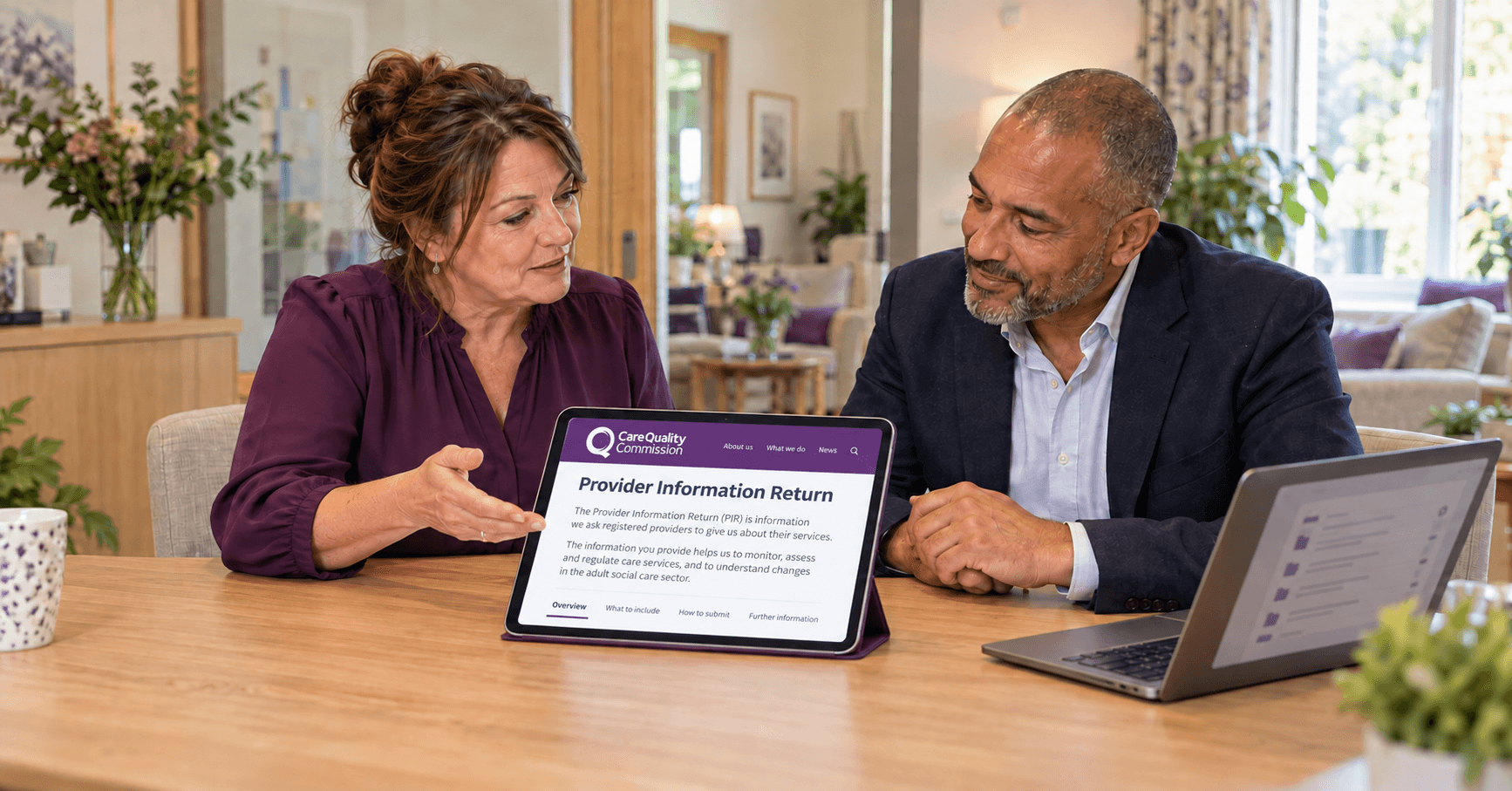
There’s a point to all this I really want Registered Managers to hear. A preventative regulator wants to know what your service is like now, not just on inspection day, and there’s one moment each year when CQC asks you to describe it in your own words: the Provider Information Return. Most managers I know treat it as a four-week chore on top of everything else. In a relationship-based system it is the written version of a conversation you will be having all year, and if the evidence behind it is scattered across ten folders in September, that conversation will be thin by March.
I should declare an interest. Insequa has built Tilly, an AI PIR manager, because we kept seeing good services describe themselves badly because of the time pressure the PIR is usually prepared under. Tilly gives you an easy, time efficient way to manage your PIR, or PIRs plural if you have multiple locations, but it’s the principle Tilly is built on that matters most; keep your evidence where you can find it, map it to the five key questions, and find your own gaps before your inspector does.
One more thing. “We see the variability in the quality of commissioning as really stark,” Badger said. That matters coming from a chief inspector, and I would not blame any provider for quoting it back to their council.
So when the email arrives, don’t wait for your inspector to form a view before you have offered one. Treat the next PIR as the start of a conversation rather than a task to get out of the way, and be open, because this only works if providers are prepared to be seen all year.
The old days had named inspectors, but they also had providers who knew their services well enough to talk about them. We will need both for this to work.
Bill Watson, Director, Insequa