
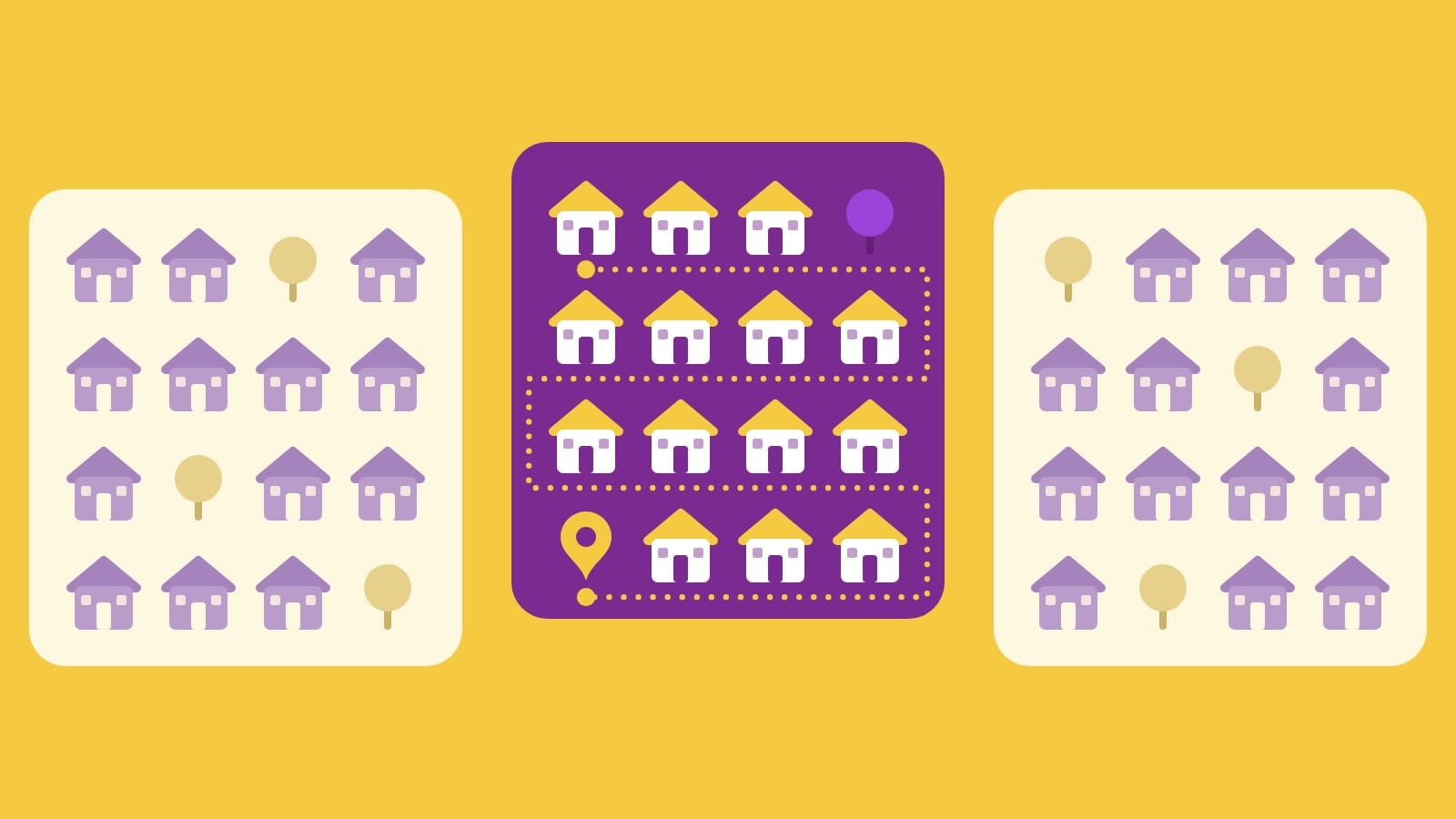
Earlier this month the social care minister, Alison McGovern, announced that councils in England will be encouraged to buy home care differently, and I think it’s genuinely the right idea. Instead of commissioning individual visits from many providers across a wide area, they’d commission across smaller patches, with “one or two main providers serving each neighbourhood”. Guidance and toolkits will follow in the spring.
We all understand the value of continuity in care provision. The person who saw you yesterday is the one who notices that today your ankles are swollen, or that you’re simply not yourself, whereas a stranger can only see what’s in front of them. Phil Holmes, the president of ADASS, put it well in his response: the present system is “defined by time and task”, and “too many people see a succession of strangers at the door”.
Care workers pay for that system too. The Homecare Association has described one provider’s payroll records in which care workers were expected to be available for up to 98 hours in a week to deliver 39 paid contact hours. That’s no basis for a career, and we shouldn’t be asking it of anyone.
There’s some evidence that organising care by neighbourhood helps. The government cites research by the Health Innovation Network South West, looking at six providers in Bristol, which found that reorganising existing visits into zones “could potentially deliver the same care with 35% less staff time and 65% less driving”. The Homecare Association points to a neighbourhood model in Leeds, where it says the share of care workers’ paid time spent with people rose from 64% to 84%. Those are really promising numbers, although “could potentially” is doing a lot of work in a study of six providers in one city.
The part that worries me, though, is that phrase about “one or two main providers serving each neighbourhood”. CQC’s latest State of Care report counted around 13,500 homecare services in England, with three in ten of them supporting four or fewer people, so the work is spread thinly across a very long tail, and that’s exactly the problem this policy sets out to fix. But you can’t concentrate the work in one or two providers per neighbourhood without deciding who they are, and the announcement doesn’t say how. It says nothing about procurement, existing contracts, smaller providers, or what happens to the person whose current provider isn’t the one chosen, and there’s no new money attached to the change either.
The money matters, because the gap is already wide. ADASS’s spring survey put the average council fee rate at £25.05 an hour, against the Homecare Association’s minimum price of £34.42. A model that promises the same care with a third less staff time will be very tempting to a council in that position, and the risk is that the saving gets banked rather than spent on paid rounds and guaranteed hours. Karolina Gerlich of The Care Workers’ Charity said it better than I can: “less time on the road must mean more time to care, not less pay”. And as Dr Jane Townson of the Homecare Association put it, “People must also keep a real choice over who supports them.”
Of course, Insequa has an interest here, because as a social care consultancy we write tenders for care providers, so a round of recommissioning is work for us. It also means I’ve watched councils redraw their contract lots before, and the providers who come through it best are usually the ones who started preparing before the tender was published.
So if you run a homecare service, I’d start now, before the spring guidance lands, by getting to know your geography. Map where the people you support live and where your care workers live, street by street, because a neighbourhood where you already have both is one you can make a case for. I’d also cost a round rather than a visit, because if payment moves to whole rounds, as the Homecare Association is asking, you’ll need to know what a round really costs you, with the travel and the gaps included. And I’d talk to your commissioner while the model is still being shaped, and to your neighbours as well, because two small providers who know a patch well may make a better main provider together than a large one arriving new.
Councils have a choice to make too. They can use this to build local, stable, properly paid rounds, or they can use it to shorten the provider list, and I really hope it’s the former. There’s a line from the Homecare Association that I’d like every commissioner to keep in mind: “A provider cannot guarantee its careworkers hours that nobody guarantees to it.”
The person at the door should be someone you know, and I really do think this policy could get us there. But somebody has to decide who gets each neighbourhood, and I’d much rather providers had a hand in that decision than waited to be told.
Bill Watson, Director, Insequa